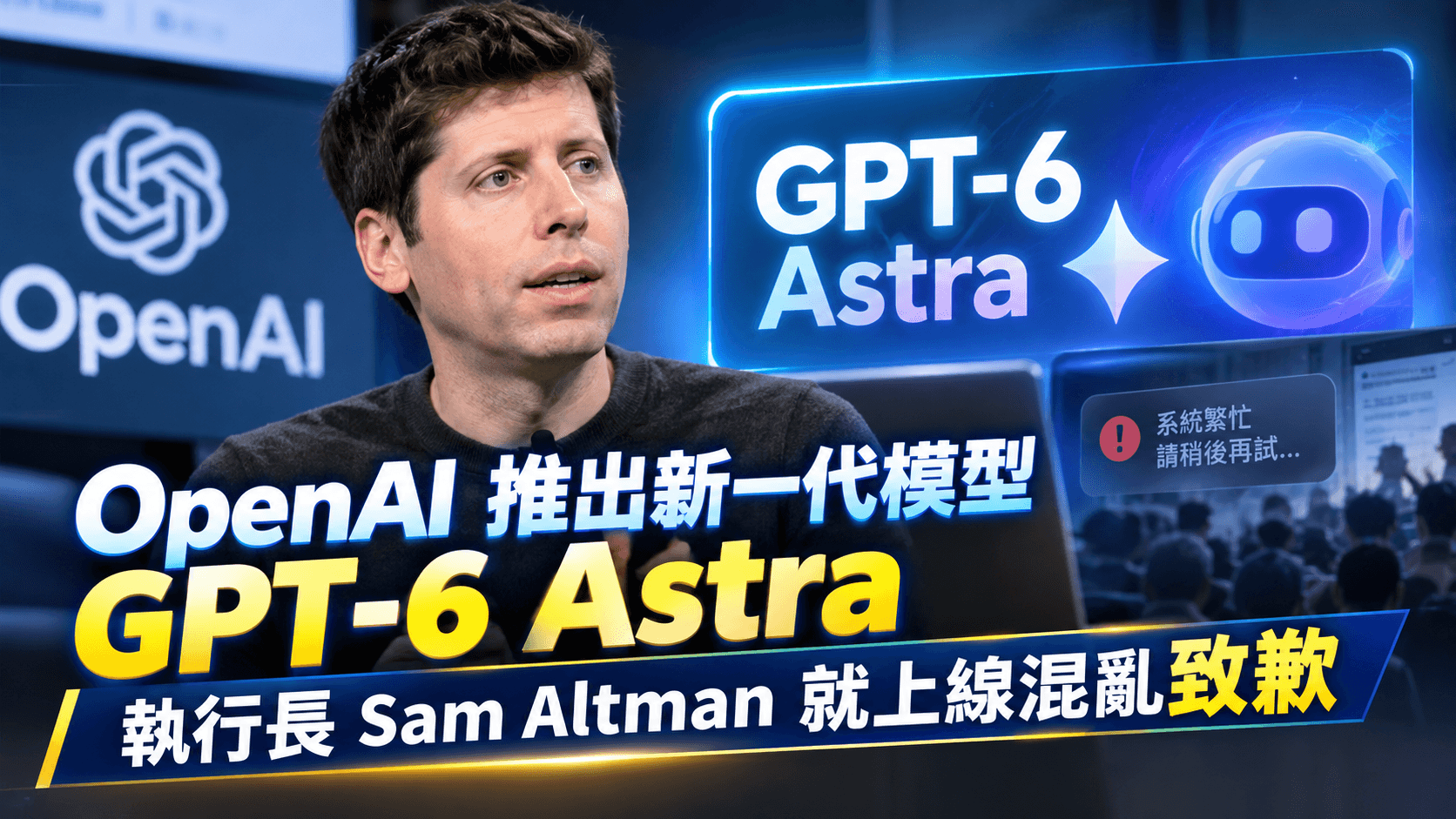
OpenAI today officially unveiled its highly anticipated next-generation frontier flagship model, GPT-6 Astra, announcing a cross-generational breakthrough in computing architecture and deep reasoning, and formally knocking on the door of the artificial general intelligence (AGI) era. This brand-new architecture, on which the company has pinned high hopes, not only shows disruptive technical metrics in multimodal understanding and autonomous planning but also aims to reshape how generative AI is used in advanced enterprise scenarios.
However, what should have been a technology celebration for the global tech world was overshadowed by a highly controversial launch strategy. In the early rollout, OpenAI chose to reserve access to GPT-6 Astra for enterprise customers integrated with the Daybreak cybersecurity platform, directly leaving out the ChatGPT Plus and Pro subscribers who reliably contribute monthly revenue. This sparked a strong backlash from communities and developers worldwide.
Facing a flood of public criticism and a user trust crisis, OpenAI CEO Sam Altman quickly apologized publicly on social media, admitting the launch process was chaotically planned and badly communicated. To calm the anger of paying users, the team promised to speed up access for all paid subscribers and API partners, and announced a compensation mechanism that resets usage limits daily, in an urgent attempt to stop the bleeding from the imbalance between technical glory and business operations.
Key takeaways
- A generational leap: OpenAI officially launched GPT-6 Astra, highlighting powerful reasoning and declaring the AGI era has arrived.
- Launch controversy: first-wave access was limited to Daybreak security enterprise users, angering Plus and Pro subscribers.
- The CEO apologizes: Sam Altman publicly admitted the rollout was chaotic and promised faster access for regular paying users and API partners.
- Compensation plan: until they get Astra access, paid members will receive an extra usage limit reset every day.
An architectural leap: GPT-6 Astra's reasoning breakthrough and the dawn of AGI
The arrival of GPT-6 Astra marks a full shift for large language models from traditional "probabilistic text generation" to a cognitive architecture capable of autonomous inference and long-horizon planning. According to technical details released by the company, Astra combines a new-generation neuro-symbolic reasoning engine with dynamic compute allocation algorithms, automatically assigning inference resources across cloud server clusters within milliseconds based on the complexity of a problem. This flexible compute architecture greatly reduces the latency that complex chain-of-thought reasoning used to bring, and delivers accuracy and efficiency far beyond earlier models in tasks such as mathematical proofs, cross-domain software architecture design and unstructured data integration.
Native integration of deep security defenses is one of GPT-6 Astra's most striking architectural innovations. Through low-level coordination with the Daybreak enterprise cybersecurity system, the model can detect threats in real time and patch vulnerabilities itself while running automated scripts. This is the main reason OpenAI chose to deploy it first in demanding security environments. However, packaging a revolutionary flagship model as an exclusive privilege for specific enterprise uses directly undercut its long-established brand image of making technology widely accessible.
Unbalanced business decisions: the trust gap between an enterprise-first strategy and paying subscribers
The urgency of monetization and the scarcity of top-tier compute are the root causes of the GPT-6 Astra launch misstep. As model parameter counts and inference costs rise exponentially, OpenAI clearly tried to recoup R&D spending quickly through high-value enterprise contracts and security solutions, giving its limited high-end compute to the enterprise customers that contribute the most. This purely cash-flow-driven resource strategy ignored the foundational role that small and mid-sized developers and individual paying subscribers have long played in its ecosystem.
The core of the user backlash is a broken value promise and a communication gap. Long-time subscribers to ChatGPT Plus (US$20 a month) and Pro (US$200 a month) essentially invest based on the brand promise of "priority access to the most advanced frontier models." When the most groundbreaking model, GPT-6 Astra, becomes a closed toy for specific enterprise partners, the premium logic of the subscription model collapses instantly. Even though Sam Altman apologized quickly and sincerely and offered the daily limit reset, it will be hard to fully erase the sense of second-class treatment and betrayal felt by longtime users in the short term.
A Taiwanese tech industry view: compute scheduling challenges and lessons for the geopolitical digital ecosystem
The strain on compute supply for the world's top models offers valuable market insight for Taiwan's tech industry, which relies heavily on cloud computing and the AI server supply chain. The infrastructure bottlenecks OpenAI exposed during the GPT-6 Astra launch clearly show that even the world's top labs still face hard physical hardware limits when meeting large-scale inference demand. This means demand for high-bandwidth memory (HBM), advanced packaging and edge inference accelerator chips will keep rising, a long-term structural positive for Taiwan's semiconductor and server supply chain at the core of global hardware manufacturing.
For Taiwanese companies and startups speeding up digital transformation and adopting AI solutions, the risk of relying too heavily on a single closed-source model ecosystem has been greatly magnified. This incident proves once again that a single vendor's change in business strategy or compute allocation can interrupt a company's product development and service quality at any time. When building AI application architecture, local companies should more actively evaluate hybrid cloud deployment and bring in open-source models that can be flexibly fine-tuned, to spread out the risk of disruptions caused by tech giants' operational swings.
Frequently asked questions (FAQ)
Why wasn't GPT-6 Astra available to all ChatGPT Plus and Pro users at launch?
Because of limited high-end inference server capacity and business strategy, OpenAI initially gave the model first to high-value enterprise contract customers integrated with the Daybreak security system, so regular paying subscribers couldn't get access right away.
What exactly is the compensation Sam Altman announced?
To ease the frustration of paying users, OpenAI promised that every eligible paid ChatGPT user will get an extra reset of their existing usage limit for each day they don't yet have GPT-6 Astra access, until the new model is fully rolled out.
When can regular developers expect to access GPT-6 Astra through the API?
According to OpenAI's latest official statement, the team is working hard to expand inference infrastructure and speed up the rollout. Access is expected to open in batches to all paid ChatGPT members and official API partners over the coming weeks.
The arrival of GPT-6 Astra clearly confirms OpenAI's leadership in frontier algorithms and the path to AGI, but its turbulent launch is also a wake-up call for the fast-growing generative AI industry. As the compute barrier for frontier technology keeps rising, how tech giants balance monetizing enterprise customers with keeping consumer communities loyal will be the key test of who leads the next generation of AI.