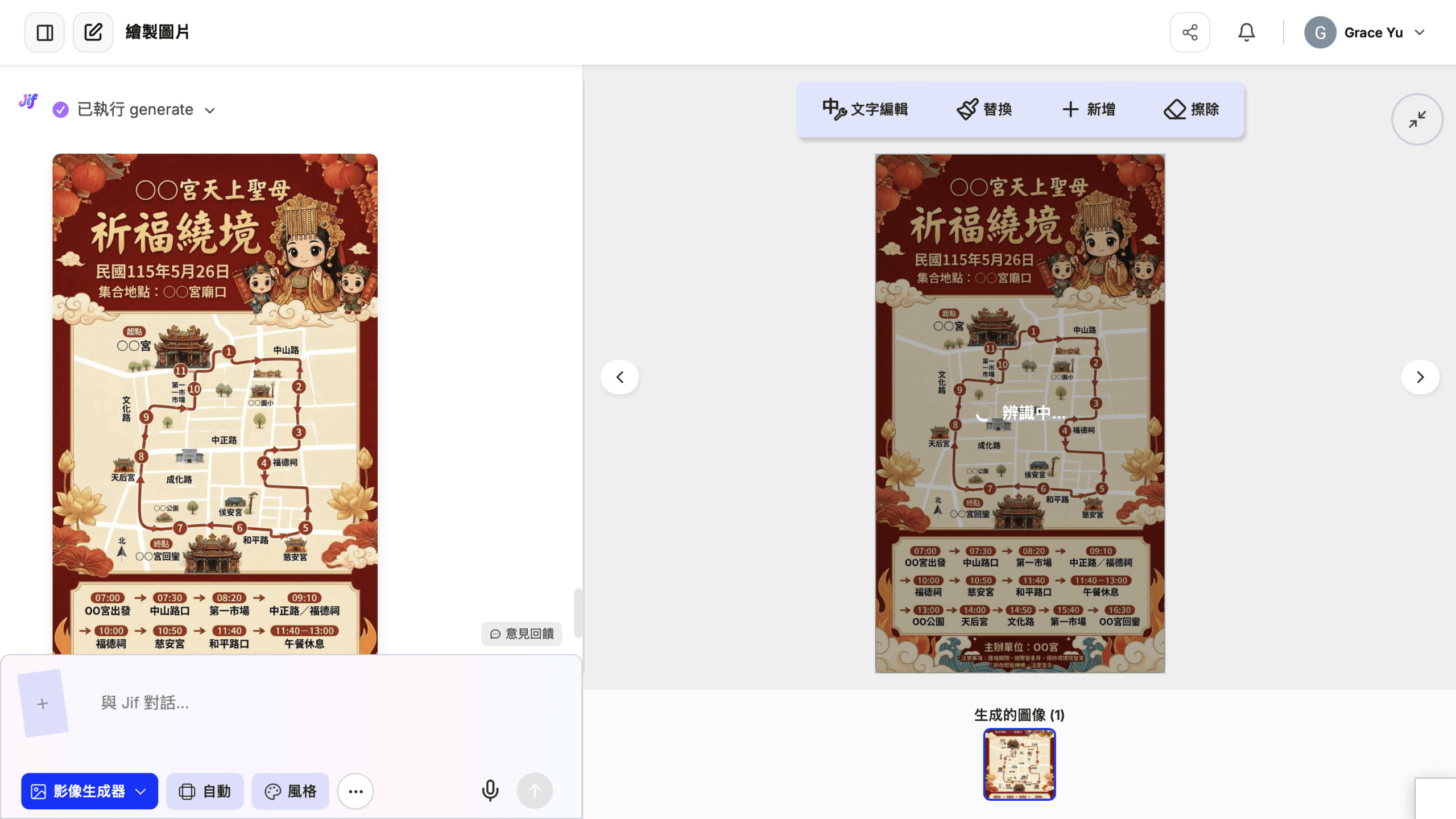
Before every Mazu pilgrimage, City God inspection tour, Wangye procession or local blessing event, temples and their volunteer teams usually need to make an event poster announcing the time, place, route and organizers.
But for many temple volunteers without a design background, making a poster is rarely easy. There is a lot of event information, it is hard to know how to lay it out, and good images are difficult to find. When promotion is needed on short notice, it is even more likely that, pressed for time, they end up piecing something together in Word or Canva.
Now, with AI image generation tools , even people with no design experience can quickly create event posters that capture the character of Taiwan's temple culture. This article uses JifChat as an example to show how to make all kinds of temple event promotional images with AI.
What Information Should a Temple Procession Poster Include?
A complete procession poster should usually include the following five pieces of information.
1. Event Name
For example:
- Mazu (Heavenly Holy Mother) Procession
- City God Blessing Inspection Tour
- Peace and Blessing Procession
The event name should be placed in the most prominent spot on the poster, so worshippers can tell the theme of the event at first glance.
2. Date and Time
It is best to clearly list:
- Gregorian calendar date
- Lunar calendar date
- Gathering time
- Departure time
If there are separate gathering, departure and return stages, list them separately to avoid confusing worshippers.
3. Gathering Location
For example:
- The plaza in front of ○○ Temple
- ○○ Community Activity Center
- ○○ Parking Lot
The clearer the gathering location, the fewer questions you will get on the day of the event.
4. Procession Route
If space allows, briefly list the main stops along the route.
If the route is long, consider adding a QR code to the poster so worshippers can scan it to see the full map and detailed schedule.
5. Organizers and Co-organizers
Listing the organizers and co-organizers adds credibility to the event and makes it easy for people to get in touch and confirm details.
Three Common Ways to Make a Temple Procession Poster
If the event is coming up soon, you can use an AI tool to produce a first draft of the poster, then proofread the text and adjust the layout. This approach is especially well suited to temple volunteers, community teams and event organizers.
How to Make a Temple Procession Poster with AI
I recently found a free AI image generation website that can automatically create different versions of a poster design once you enter the event information and the style you want. Compared with laying out a design from scratch, it is a better fit as a tool for making promotional materials for temple events, community activities and local festivals.
Next, we will use a temple procession as an example to show how to design a poster with AI.
Step 1: Gather the Event Information
Before you start generating the poster, it is best to gather all the event information and prepare any reference materials.
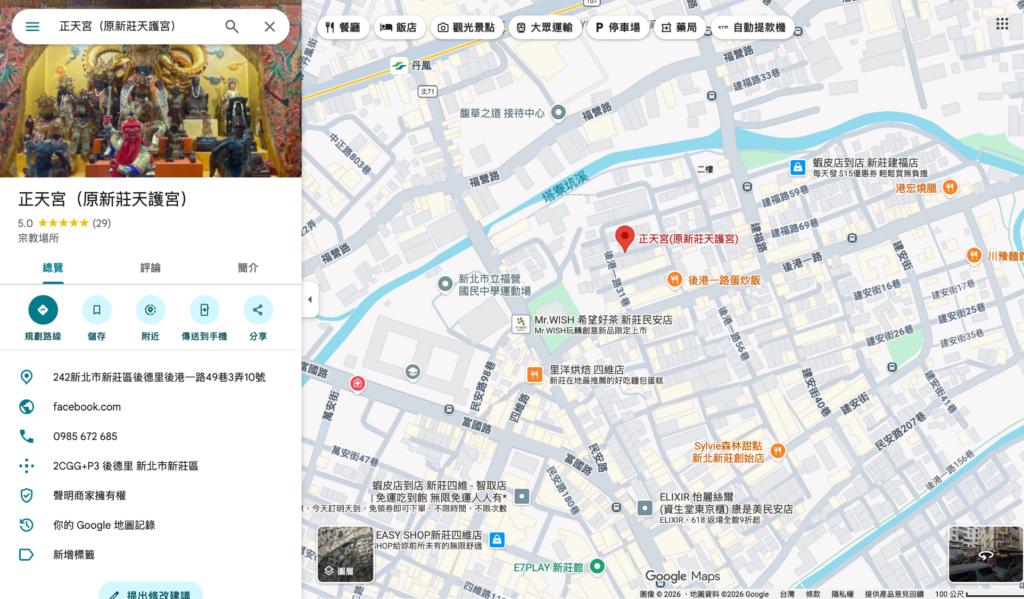
Besides the basic event details, if the procession route has already been planned, you can take a screenshot of the event area and route in Google Maps to use as a reference image when generating the poster.
It is easy to do: just display the full procession route and key stopping points in Google Maps and save a screenshot.
We recommend preparing the following:
- Event name
- Date and time
- Gathering location
- Procession route
- Organizer
- The poster style you want
- A Google Maps route screenshot (recommended)
For example:
Mazu Peace Procession
July 20, 2026
Gather at 8:00 AM, depart at 9:00 AM
Gather at the plaza in front of ○○ Temple
○○ Temple → ○○ Old Street → ○○ Market → ○○ Park → ○○ Temple
Traditional temple style, red and gold color scheme, dragon and phoenix motifs, a lively yet solemn atmosphere
The more complete your information, the better the AI can understand the event and the route, and the closer the generated poster will be to what you actually need.
Step 2: Open JifChat
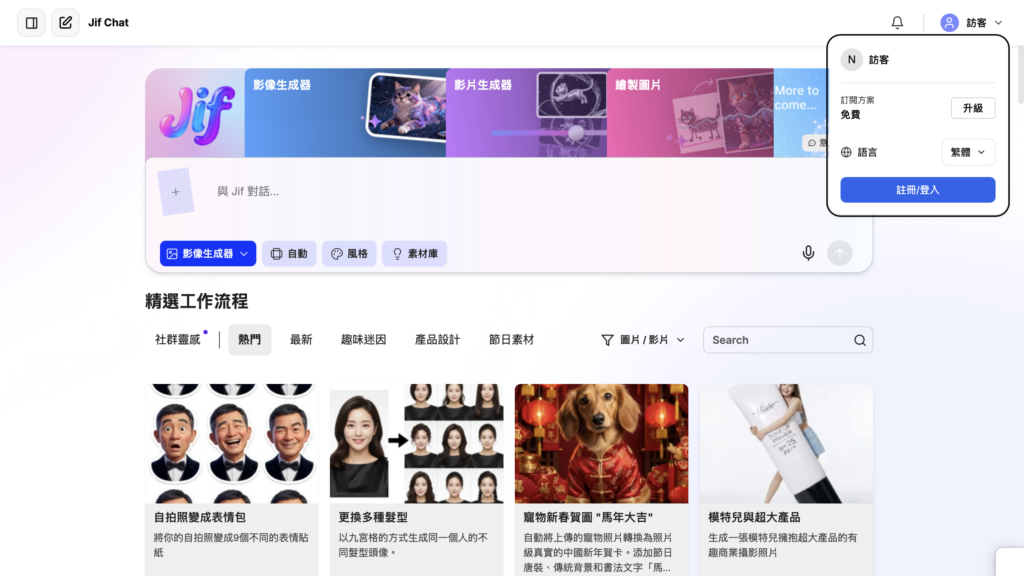
After visiting the JifChat website and signing up, new users get a 7-day free trial, during which they can use the image generation feature to try out different poster styles.
If it is your first time, it is a good idea to browse the example works on the platform first, find a visual direction you like and then start generating images. You will usually get results that fit your needs faster.
For temple volunteers, event organizers or community workers without a design background, this is easier to pick up than learning design software from scratch, and it lets you produce event promotional materials quickly.
Step 3: Enter a Prompt and Generate the Image
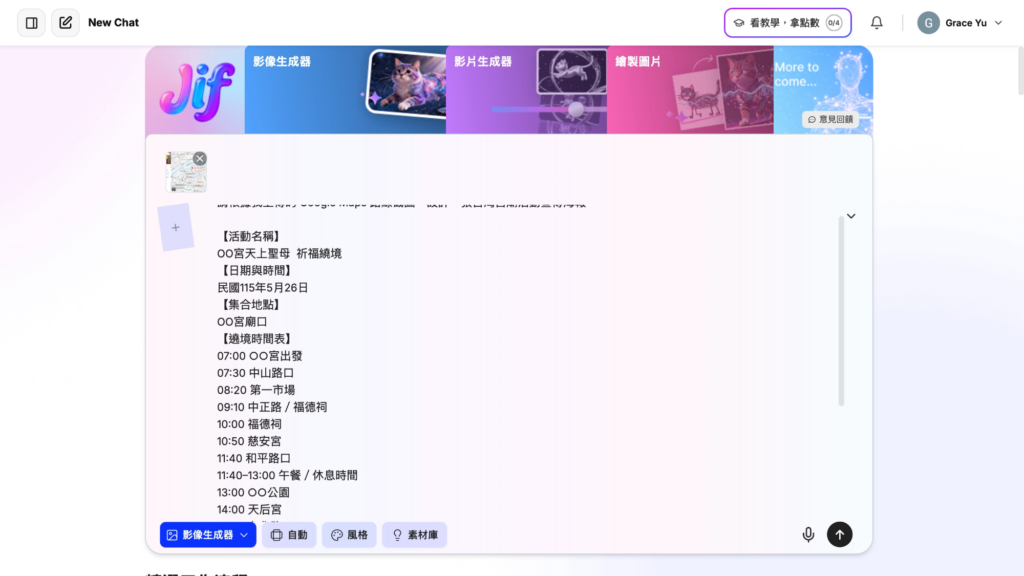
Next, upload the event information you gathered and the route map to JifChat, and enter a prompt.
For example:
Based on the route map I uploaded, please design a promotional poster for a Taiwanese temple event.
[Event Name] Mazu Peace Procession
[Date and Time] July 20, 2026, gather at 8:00 AM, depart at 9:00 AM
[Gathering Location] The plaza in front of ○○ Temple
[Organizer] ○○ Temple Management Committee
[Poster Style] Traditional temple style
[Design Requirements]
Refer to the Google Maps route screenshot I uploaded and turn the procession route into a simple, easy-to-read route diagram.
The layout must keep areas for the event name, date and time, gathering location, route information and organizer.
The image should showcase the character of Taiwan's temple culture, with red and gold as the main colors, and include elements such as dragon and phoenix motifs, auspicious clouds, lanterns, temple eaves, incense and the procession troupe.
The overall atmosphere should be solemn yet lively, suitable for posting on Facebook, Instagram, Threads and LINE groups.
Step 4: Edit the Text and Download
Once the image is generated, you can use JifChat's "Text Edit" feature to adjust the content, changing the event details or any other text.
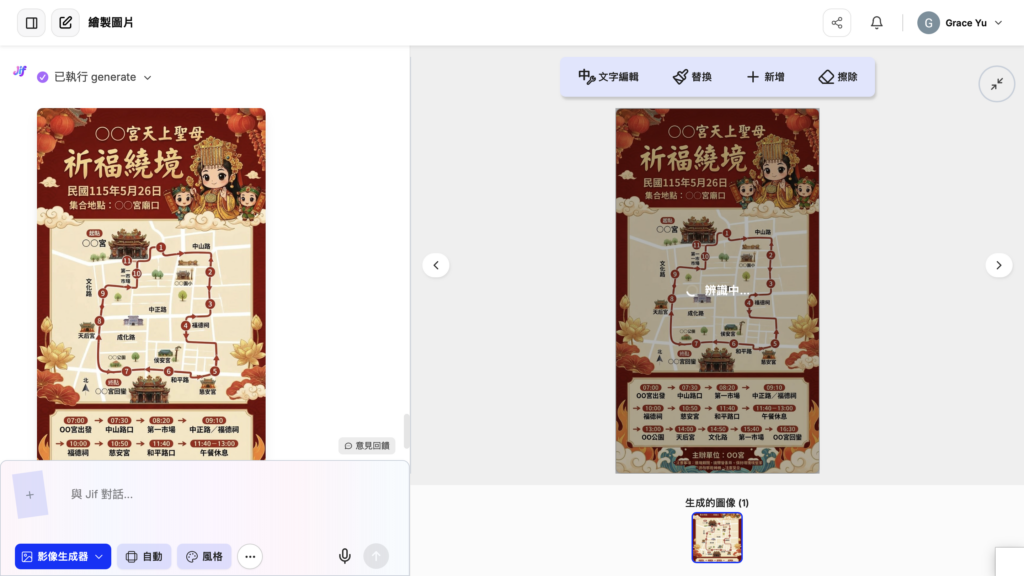
Finally, we recommend double-checking:
- Is the event name correct?
- Are the date and time correct?
- Is the gathering location clear?
- Is the route information complete?
- Is the organizer clearly listed?
Once everything is correct, you can download the poster and share it on Facebook, Instagram, Threads, LINE groups or the temple's fan page.
With AI's help, even without a design background, you can create a procession poster in a short time that both communicates the information and reflects the character of temple culture.
Complete Procession Poster Prompt: Copy, Paste and Use Right Away
Based on the Google Maps route screenshot I uploaded, please design a promotional poster for a Taiwanese temple event.
[Event Name] (Enter the event name)
[Date and Time] (Enter the date and time)
[Gathering Location] (Enter the gathering location)
[Procession Schedule] (Enter the time and location of each stop)
[Organizer] (Enter the organizer)
[Poster Style] (Traditional temple style / Solemn sacred style / Modern cultural style)
[Design Requirements]
Refer to the Google Maps route screenshot I uploaded and turn the procession route into a simple, easy-to-read route diagram.
The layout must keep areas for the event name, date and time, gathering location, route information and organizer.
The image should showcase the character of Taiwan's temple culture and be suitable for posting on Facebook, Instagram, Threads and LINE groups.
AI Boosts Production Efficiency, but People Still Need to Safeguard the Cultural Content
Using JifChat to make temple procession posters can help temple volunteers and event organizers quickly come up with a visual direction, lower the barrier to design and make promotional materials easier to create and share.
However, AI-generated posters still need a human to check the event information, especially the date, location, route and organizer. For temple events, a poster is not just about looking good. What matters more is whether it communicates the information clearly and carries on the spirit of local culture.
A good procession poster should do three things at once: be easy to understand, make people want to take part and help more people discover local religious culture.